
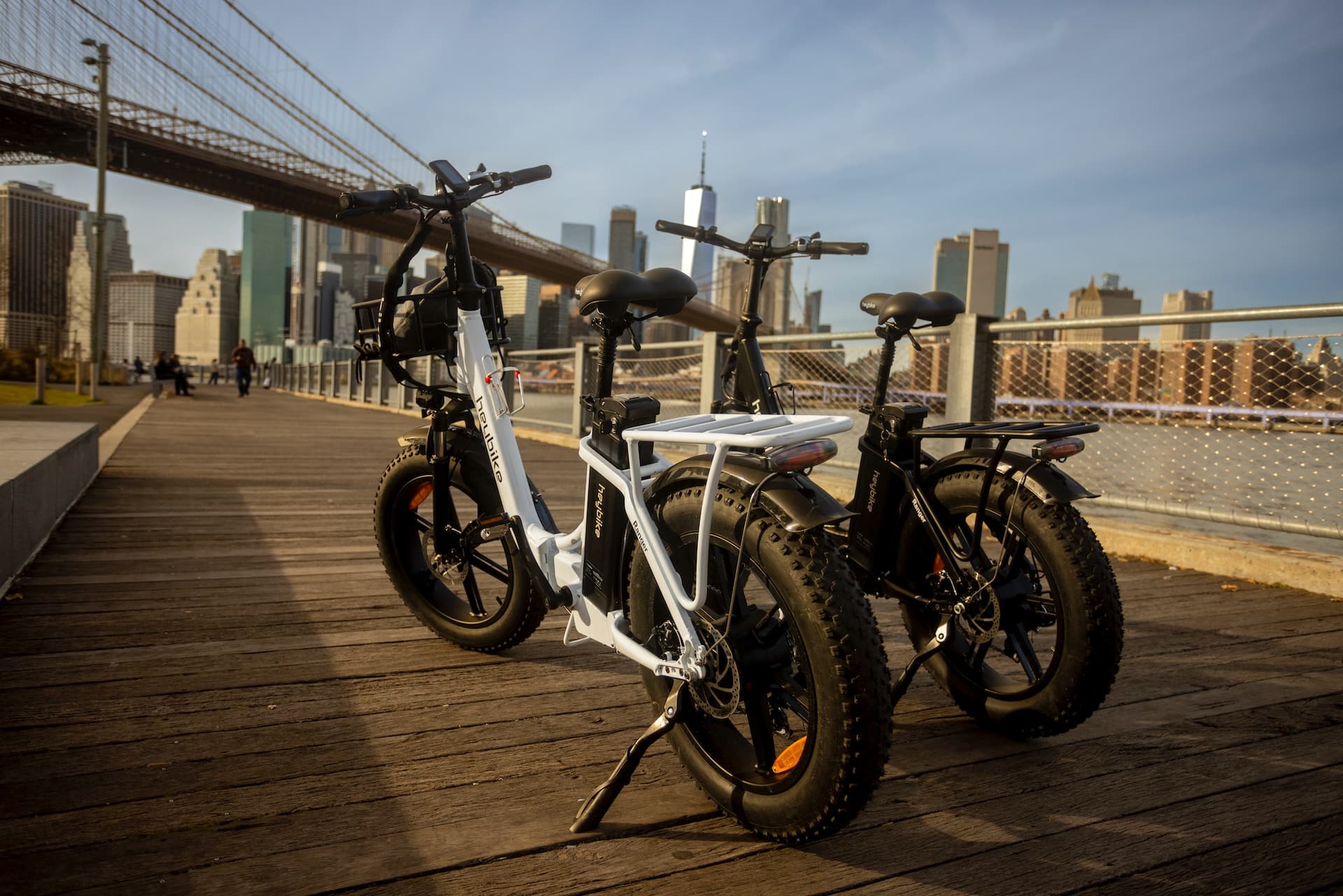
E-Bikes
It’s a bicycle with a boost! Electric bikes are rapidly becoming a popular form of safe, environmentally friendly transportation. With zero-emissions, cost savings, and a variety of styles, e-bikes are an excellent clean mobility alternative to EVs.
Electric bikes are just like traditional bikes but with a battery and a motor that maximize your cycling effort.
Average cost of an e-bike. E-bikes start at $1,500
 2 TypesPedal Assist &Throttle + Pedal Assist
Pedal-assist bikes sense when the pedal is pushed and provide extra power to help. Throttle + Pedal Assist bikes can be powered by pedal-assist or by pressing the throttle.
Distance on a single charge. (When charge runs out, the bike can still be ridden manually.)
Alternative Transportation
E-bikes are a safe clean mobility option that can be used as an alternative or supplement to a car. Studies have shown that bike infrastructure reduces traffic congestion and makes roads safer for all travelers. And thanks to the added boost from the motor, bike riders can travel farther and more efficiently. E-bike batteries can be charged via any normal socket and can still be operated manually when the charge runs out. With a variety of types from city to mountain to adaptive, there’s an e-bike option that will meet everyone’s transportation needs!
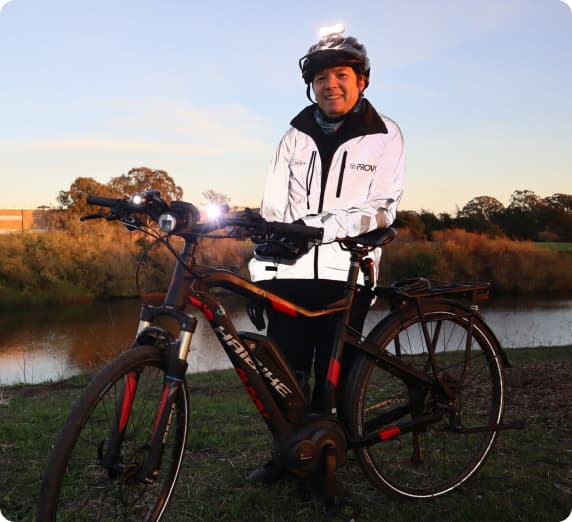
Photo Credit: Ecology Action
Cost & Savings
Car owners who transition to e-bikes enjoy savings on fuel, maintenance, and more! E-bikes do not require car insurance and will save considerably on parking-related fees. In addition, e-bikes are fueled by a battery which costs less than a penny per mile to charge. And although e-bikes require more upkeep than traditional bikes, their costs are significantly lower than car maintenance prices. Eligible individuals may also apply for grants or discount vouchers to help with the purchase of e-bikes and e-bike accessories.
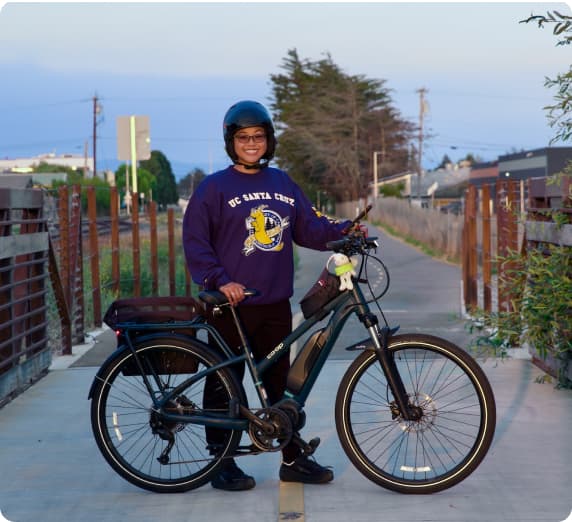
Photo Credit: Matt Miller, Ecology Action
Health & Environmental Benefits
With exercise opportunities and air pollution reduction, e-bikes help build a healthy future for all. Although the motor does most of the effort, e-bike pedaling offers a simple way to add more cardio to your routine. E-bikes have zero emissions and, therefore, are an effective way to reduce air pollution and fight climate change. If an e-bike completely replaces a vehicle, these benefits increase exponentially. Thus, e-bikes have a positive impact on both riders’ health and everyone’s quality of life.
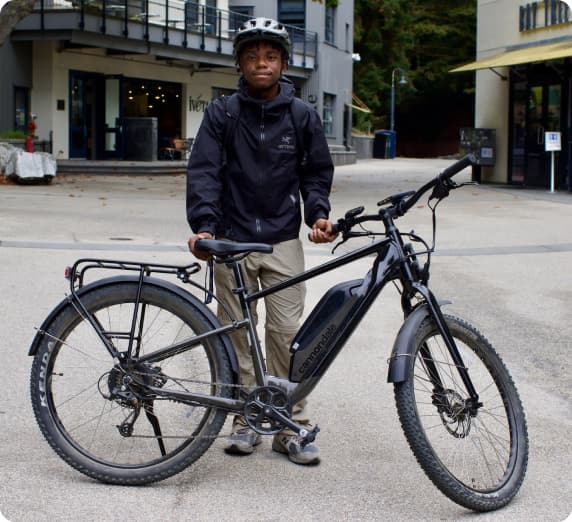
Photo Credit: Matt Miller, Ecology Action
"This bike has become more than just a mode of transport; it's a symbol of agency, independence, and freedom."
E-Bike Safety
Be Visible, Be Predictable
When operating an e-bike, we recommend that you follow traffic laws and the general bike safety motto, "Be Visible, Be Predictable". Download our safety flyer to learn more about the accessories and practices that will keep you safe on the road.
Take an e-bike safety class
These organizations offer e-bike safety resources and classes. You can learn more by going to their websites through the links below.


Frequently asked questions
Most e-bikes cost around $1,500-4,000. Thanks to the rise of bike culture, there are a growing number of grants and discount vouchers available for e-bikes and e-bike accessories! To see if you qualify, click on the "Find Programs" button below to start your eligibility check.
Yes! Recent e-bike improvements were designed with the rider's safety in mind and California has enacted safer passing laws that favor cyclists. We also recommend that you follow general bike safety rules: use bike lanes, wear a helmet, follow traffic laws, and plan ahead for flat tires. In addition, you can schedule a safety class with one of our partners at Healthy Active Streets or Ecology Action.
E-bike chargers plug into any normal home socket, so you can charge at home or even on the go! Charging usually takes 2-5 hours and can last up to 55-65 miles. If the battery runs out, you can still operate the bike manually. E-bike batteries last 2-4 years or about 500-1,000 charges.
Nope! The state of California does not require a driver's license, license plates, or insurance to operate an e-bike. Other states may have different requirements, so we recommend checking with their local DMV before riding your e-bike out-of-state.
Connect with local bike shops and cycling communities to find a trusted vendor near you! These businesses are also a great resource for future repairs and maintenance. Please note that in order to receive certain program incentives, you may need to purchase from a program-approved retailer.
There's no age limit for e-bikes that reach maximum speeds of 20 mph. For younger children, opt for a child seat or cargo e-bike. All bike riders under 18 must wear a helmet.
There are two types of e-bikes: pedal-assist and throttle + pedal-assist. E-bikes also come in a variety of styles including mountain, urban, fitness, cargo, road, hybrid, and more. There are also adaptive e-bikes that may be eligible for an additional incentive of $750.
Rural areas may require additional safety considerations. We recommend that you check your route ahead of time and ensure that the lighting, terrain, and traffic conditions are safe for you. Consider finding an e-bike buddy to ride with -- there's safety in numbers!